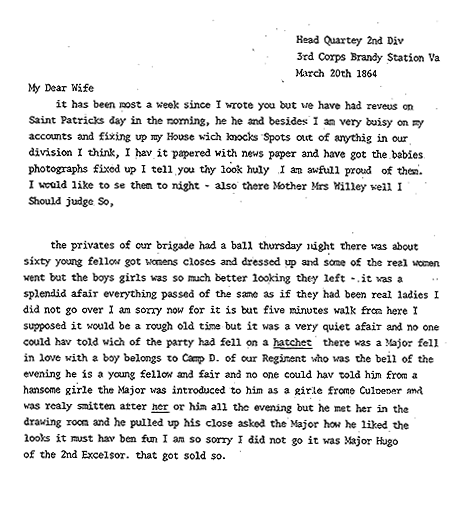
Writing about another community largely without women--that
of the men who pursued the California Gold Rush in the 1840s and 1850s--Susan
Lee Johnson has noted:
. . . Anglo-American and European men invoked a peculiarly
nineteenth-century, middle-class notion of the social, one in which
the influence of white women and their perceived attributes were
axiomatic. The social was thought to revolve around familial, relational,
and community concerns, around human interaction, and connectedness.
At the same time, women were thought to constitute a kind of glue
that held families, relationships, communities--indeed, society--together.
The social, in this womanly construction, was an antidote to the
manly anomie that increasingly characterized a changing economic
milieu, in which individual men were forced to make themselves.
(5)