It was with her clothing in this [sorry] plight that [Mrs. Bickerdyke]
again visited Chicago, in the summer of 1863, and the ladies of
the Sanitary Commission replenished her wardrobe, and soon after
sent her a box of excellent clothing for her own use. Of this,
some articles, the gift of those who admired her earnest devotion
to the interests of the soldier, were richly wrought and trimmed.
Among them were two beautiful night-dresses, trimmed with ruffles
and lace. On receiving the box, Mrs. Bickerdyke, who was again
for the time in charge of a hospital, reserving for herself only
three or four of the plainest and cheapest articles, traded off
the remainder, except the two night-dresses, with the rebel women
of the vicinity, for butter, eggs, and other delicacies for her
sick soldiers; and as she purposed going to Cairo soon, and thought
that the night-dresses would bring more for the same purpose in
Kentucky, she reserved them to be traded on her journey. On her
way, however, at one of the towns on the Mobile and Ohio railroad
(Jackson, we believe), she found two poor fellows who had been
discharged from some of our hospitals with their wounds not yet
fully healed, and their exertions had caused them to break out
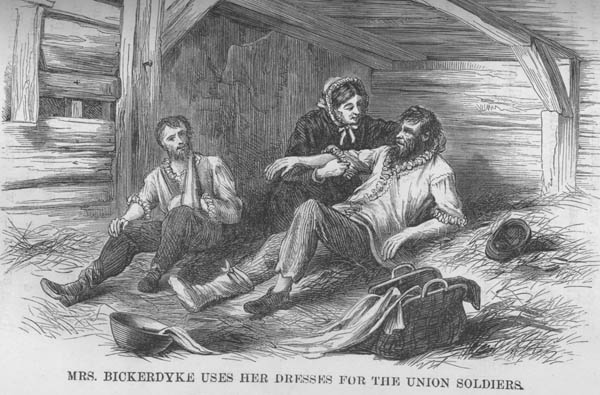
afresh. Here they were, then, in a miserable shanty, sick, bleeding,
hungry, penniless, and with only their soiled clothing. Mrs. Bickerdyke
at once took them in hand. Washing their wounds and stanching
the blood; she tore off the lower portions of the nightdresses
for bandages, and as the men had no shirts, she arrayed them in
the remainder of these dresses, ruffles, lace, and all. The soldiers
modestly demurred a little at the ruffles and lace, but Mrs. Bickerdyke
suggested to them that if any inquiries were made, they could
say that they had been plundering the secessionists. (300)
close window