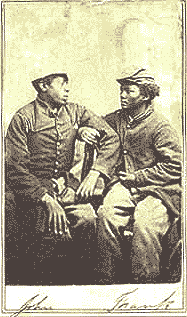
Private Thomas Long delivered a sermon during the War that touched
on some of the predicaments of African-American manhood:
We can remember, when we fust enlisted, it was hardly safe for we
to pass by de camps to Beaufort and back, lest we went in a mob and
carried sidearms. But we whipped down all that . . . not by going
into de white camps for whip um; we didn't tote our bayonets for whip
um; but we lived it down by our naturally manhood; and now de white
sojers takes us by de hand and say Broder Sojer. Dats what dis regiment
did for de Epiopian race.
. . . If we hadn't become sojers, all might have gone back as it
was before; our freedom might have slipped through de two houses of
Congress and President Linkum's four years might have passed by and
notin' been done for us. But now tings can neber go back, because
we have showed our energy and our courage and our naturally manhood.
Anoder ting is, suppose you had kept your freedom witout enlisting
in dis army, your chilen might have grown up free and been well cultivated
so as to be equal to any business, but it would have been always flung
in dere face 'Your father never fought for he own freedom' and what
could dey answer? Neber can say that to dis African race any more.
(Qtd. in Reid, The Vacant Chair 64)