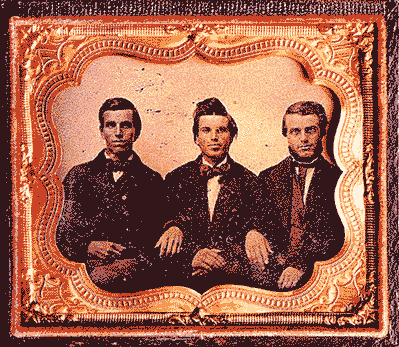
"At first glance, the evidence of a cult of friendship may appear
to contradict the image of the nineteenth-century American man as
imprisoned within his solitude-whether as a product of his successful
adaptation to the Jacksonian creed of independence, competition, and
the single-minded pursuit of prosperity, or because of the dehumanizing
effects of industrial capitalism. Given further consideration, it
is not hard to see that in . . . [such times,] friendship, and the
sentimental practices of correspondence and commemorative portrait
photography, would be cherished by Americans who could turn to them
to counter the human cost of social developments that otherwise effected
estrangement. Not only did photographs of intimate friends make it
possible to keep the image of an absent loved one close at hand, they
provided evidence of comfort and love in the midst of widespread social
disruption and human disconnection" (Deitcher, Dear Friends,
75).